Continuity and experimentation
Brown Brothers traces its beginnings to vines planted by John Francis Brown at Milawa in 1885, followed by the first vintage in 1889. The winery’s published history also records experimentation in varieties and winemaking, including the Kindergarten Winery.
That history offers a useful way to approach the contemporary imagery. An established producer can preserve a recognisable identity while making room for products and presentations that address different occasions.
Giving a range clear differences
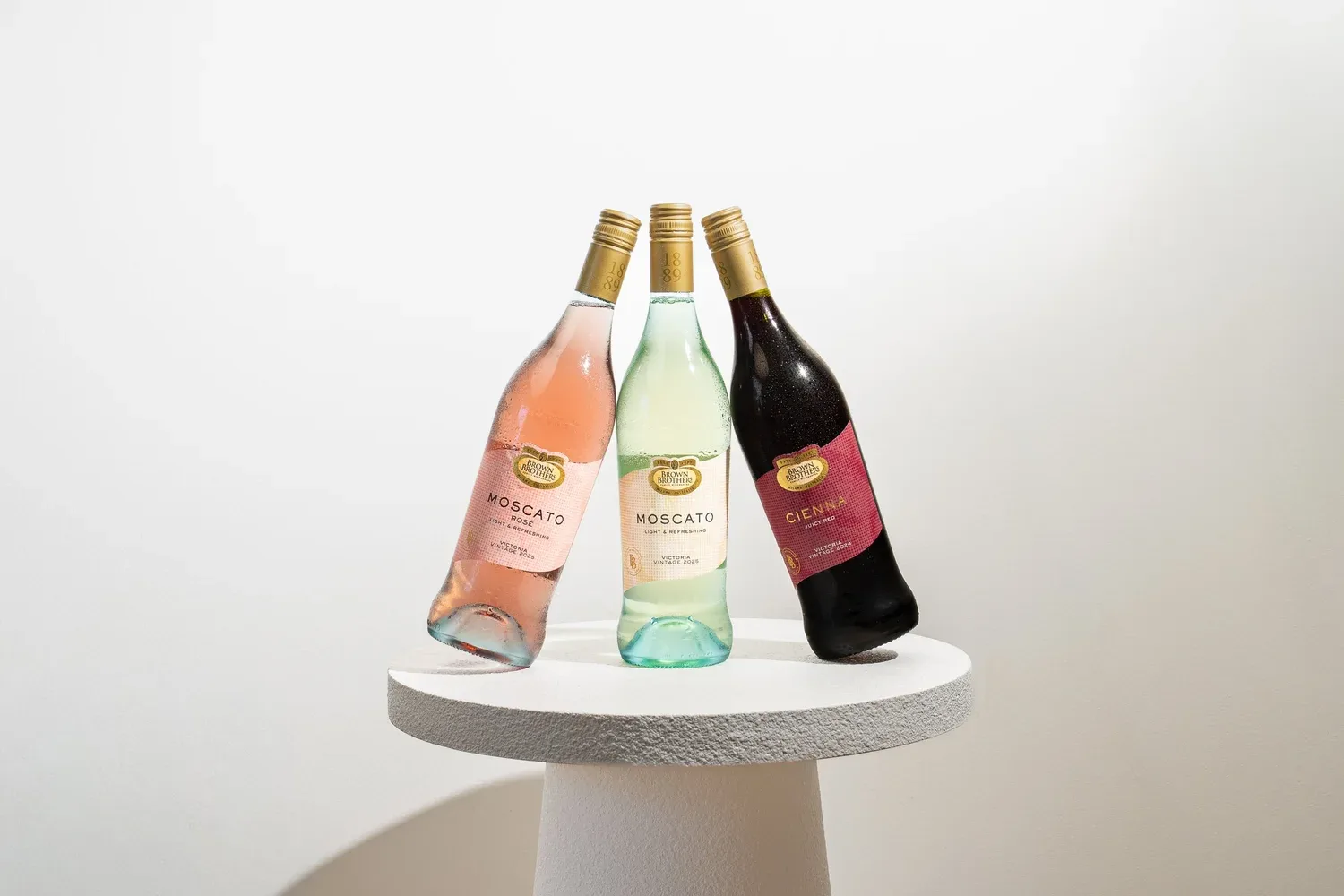
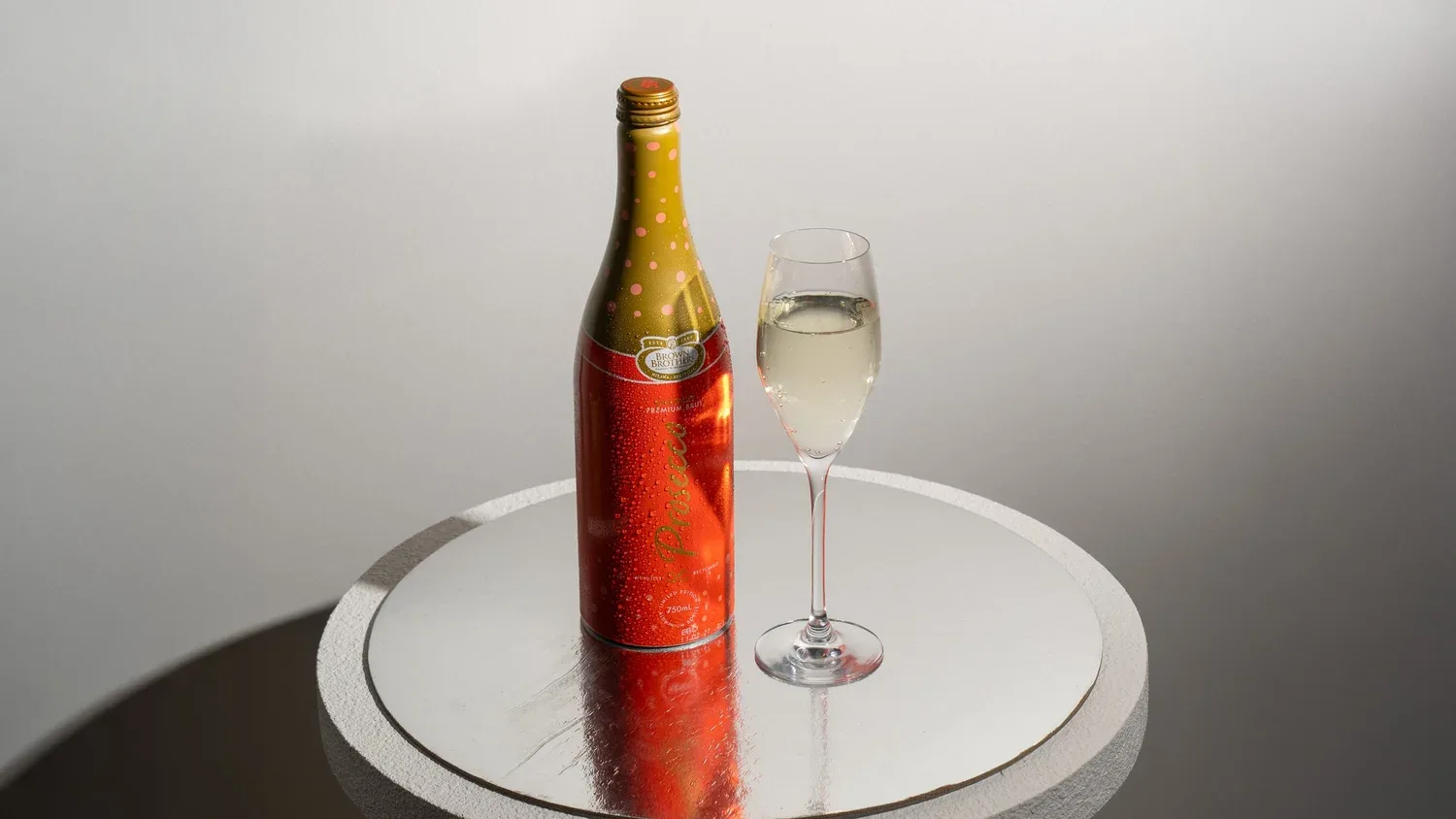
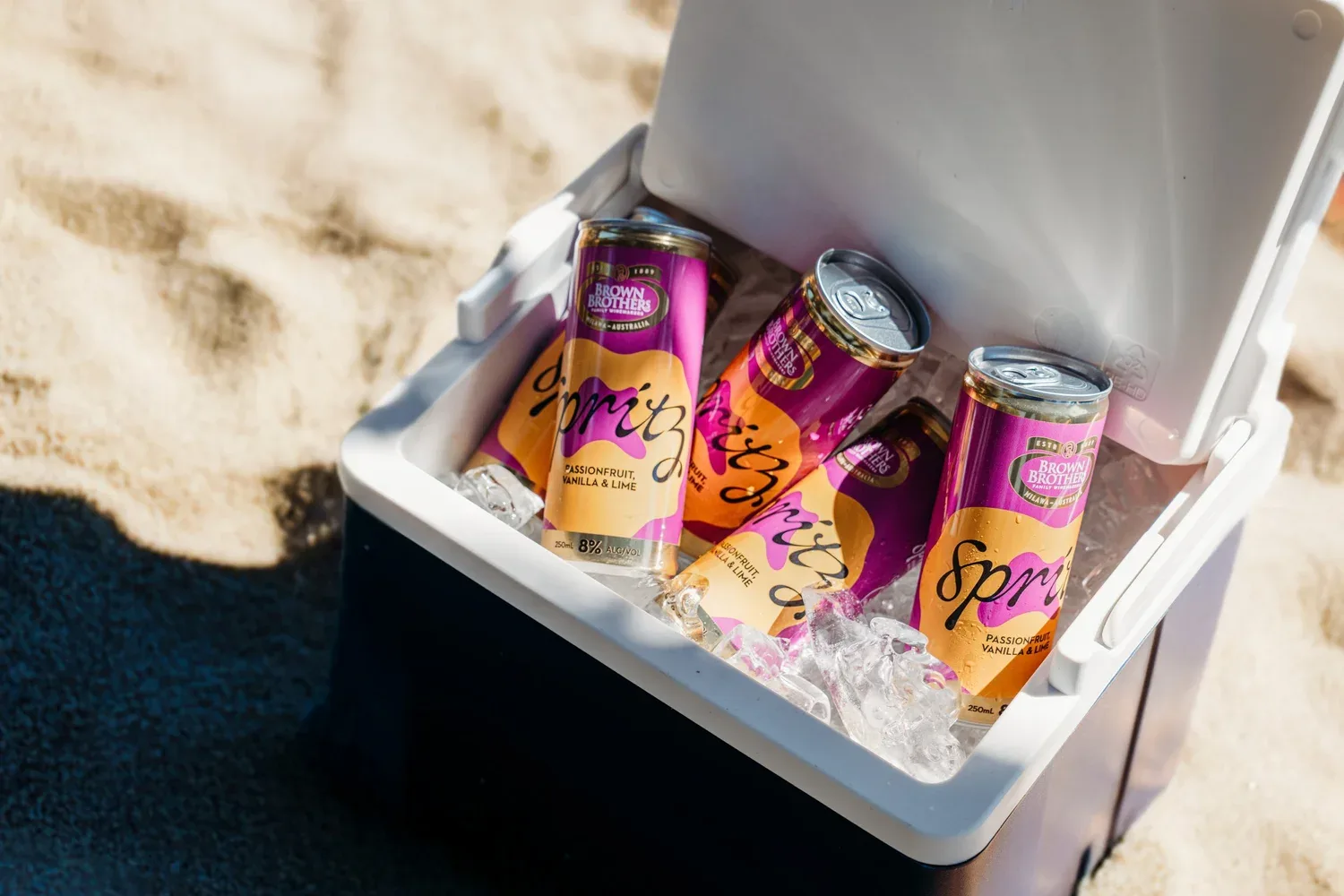
In Jaccob McKay’s collection, three bottles on a pale plinth make the distinctions between label, glass and colour easy to see. A photograph of brightly packaged cans uses a more informal register.
The contrast is purposeful. A range does not need every product photographed in an identical setting to feel coherent. Clear form, considered spacing and enough label detail can supply continuity while the surrounding mood changes.
The limits of an occasion photograph
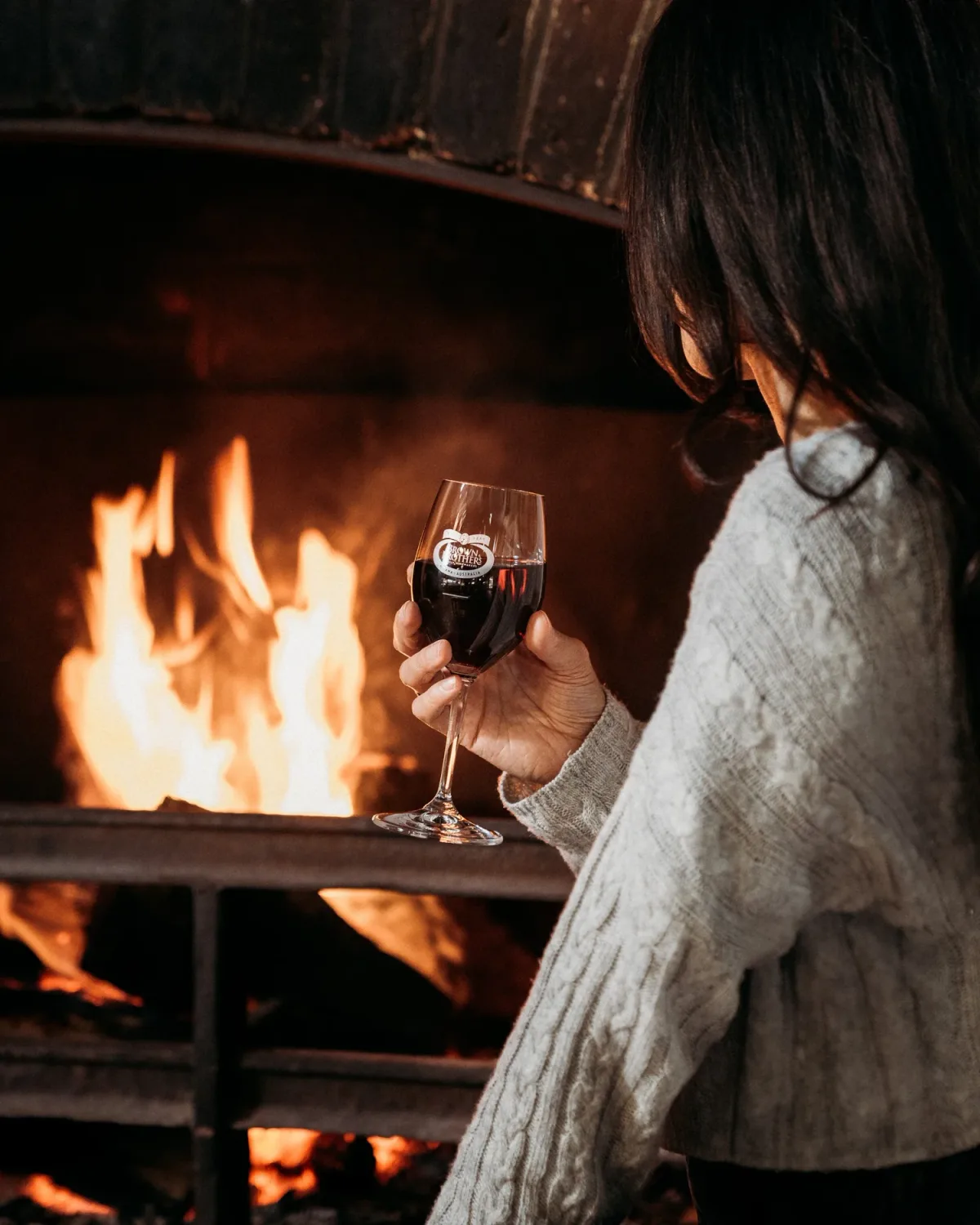
A fireside scene moves the wine into a more intimate setting. It suggests an occasion through light and proximity, rather than supplying a tasting note.
That distinction is useful for readers: a campaign image can communicate how a producer presents a wine, but vintage, grape variety, production method and flavour need information about the particular bottle. The Brown Brothers project gallery records the photographic commission. Together with the producer’s history, it offers a design perspective on a Milawa brand whose public presentation has room for both continuity and change.
Project and source note
The images come from the credited project collections. This is a source-based feature about the producer or its presentation, not a tasting or product test.