An estate with several kinds of work
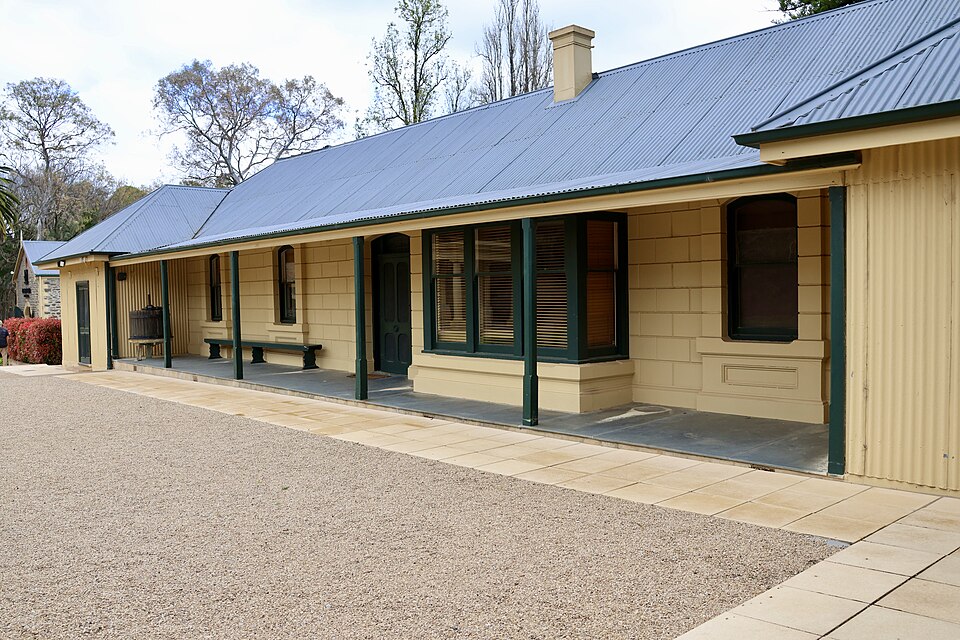
Seppeltsfield is easiest to understand as a collection of working histories. Wine production sits alongside buildings once used for storage, processing and feeding a large workforce, while present-day visitors also encounter food, craft and design.
The estate was established in 1851. Its own timeline provides a way to connect the architecture with the activities that shaped it, rather than treating every old building as picturesque scenery.
Choose one part of that story to explore in detail before adding the rest of the day. A particular cellar experience, a craft visit or a meal can each provide a different starting point.
Keep two cellars distinct
The Centennial Cellar dates from 1878, when Benno Seppelt set aside wine with the intention that it remain unbottled for a century. That history underpins the estate’s long-running collection of single-vintage fortified wines.
The Gravity Cellar, completed in 1888, tells another story. Built into the hillside on terraces, it used the site’s levels to assist the movement of fruit through production. The estate records its return to vintage use after restoration in 2010.
These are different places with different roles. Read the current experience descriptions to establish which spaces a booking includes, rather than assuming that a standard cellar-door tasting provides access to every historic area.
Read the buildings through their tasks
The estate’s timeline also records a vinegar factory, a dining hall and a bottling hall. Those uses suggest questions worth carrying around the public visitor areas: how were materials moved, where did people work, and which spaces now serve another purpose?
Ask staff or use the official interpretation to check a building’s history. A doorway or a large room can invite an interpretation without proving it. Keep the original function, later adaptation and present-day use separate in your notes.
Our Tahbilk story offers another perspective on looking beyond the tasting counter to the wider estate.
Make time for JamFactory
JamFactory’s Barossa site provides exhibitions, a shop and independent makers’ studios at Seppeltsfield. Its visitor information explicitly notes that independent studios are not necessarily occupied at all times, so check directly if seeing a particular maker at work is important to you.
Approach a craft object with the same curiosity you might bring to a wine: who made it, which materials were chosen and what decisions shaped the result? If you are buying, ask about intended use and care as well as appearance.
A craft stop changes the pace of the day and gives members of a group with different interests another reason to spend time at the estate.
Book the parts of the day separately
Check the current details for the tasting or tour, the restaurant and JamFactory. Their activities share an estate without necessarily sharing every opening time, booking system or inclusion. Confirm access arrangements for the particular route and experiences you intend to use.
Leave enough time between them to look at the buildings and read the interpretation. For a related approach to planning around different cellar-door experiences, see our Yering Station and TarraWarra guide.
A useful record to take home is a short account of one process you understood better. That might concern a cellar, a reused building or a maker’s material. It gives the visit a meaning that lasts beyond the tasting list.